


Google Marketing Live 2026 gave businesses a sweeter look at where Search, Shopping, and lead generation may keep heading next.
Many of the announcements build on tools marketers already know: AI Max, Performance Max, Smart Bidding, conversational search experiences, and AI-assisted recommendations. The difference now is how much more connected AI is to the customer decision-making process.
Google’s AI systems are helping users:
- compare products
- ask questions
- evaluate businesses
- narrow down options
- qualify leads
- make faster buying decisions
That shift may place more attention on the information businesses feed into Google’s AI systems.
Search Experiences Keep Moving Toward AI-Guided Discovery
Google continues pushing Search beyond traditional keyword matching and further into conversational, AI-assisted discovery experiences.
Several announcements pointed in that direction, including:
- Ads in AI Mode
- AI Brief
- AI Max for Search campaigns
Together, these updates suggest Google wants ads to feel more like useful answers inside AI-powered search experiences.
Ads in AI Mode Moves Ads Closer to the Answer
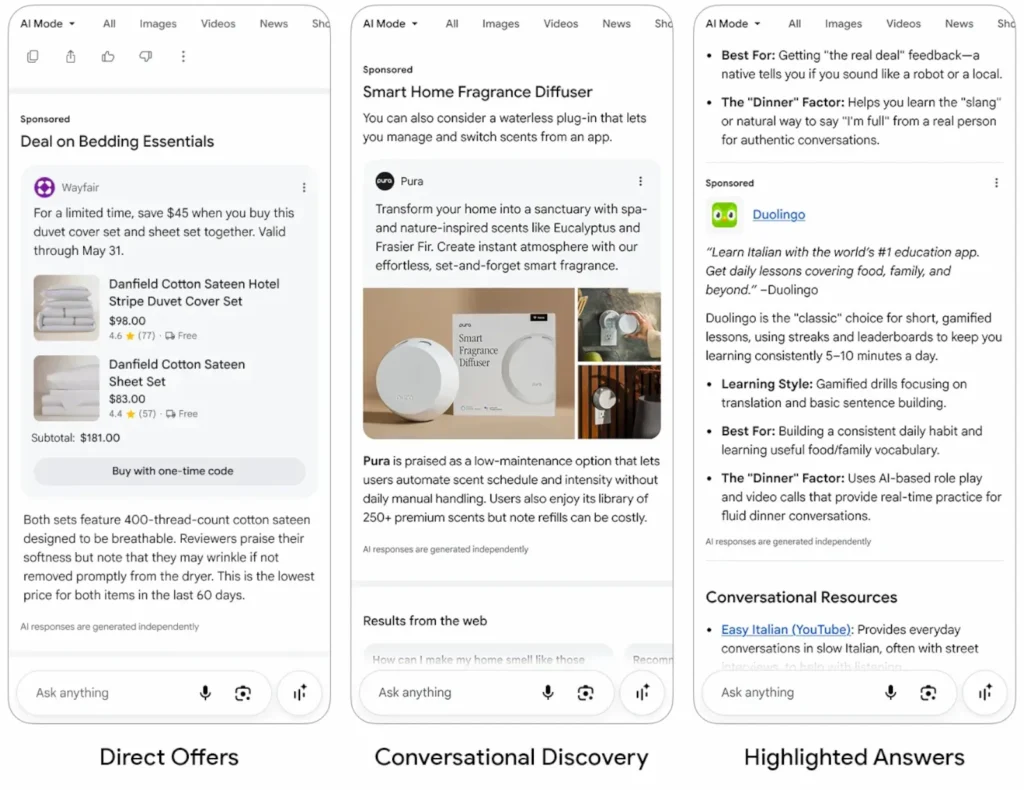
One of the larger announcements from Google Marketing Live 2026 was Ads in AI Mode.
Google is testing new ad formats directly inside AI-generated responses. These placements still appear clearly labeled as ads, though they are built to feel more connected to the user’s search.
Google described these experiences as:
- “ads that reason”
- ads that adjust creative automatically
- ads that use verified product and business information to help users make decisions faster

What This Means for AI-Assisted Discovery
Businesses are starting to compete for recommendation visibility, not just rankings and clicks.
As AI-generated answers continue appearing higher in Search, businesses may need stronger:
- website content
- service explanations
- product information
- FAQs
- reviews
- trust signals
- structured data
- local listings
Law firms and healthcare providers relying on local SEO may need stronger service pages, clearer website messaging, and more consistent review signals as AI-generated answers continue appearing higher in Search.
Thin content, outdated pages, vague service descriptions, and inconsistent business information may create more confusion for both users and AI systems.
AI Brief Adds More Direction to AI-Powered Campaigns
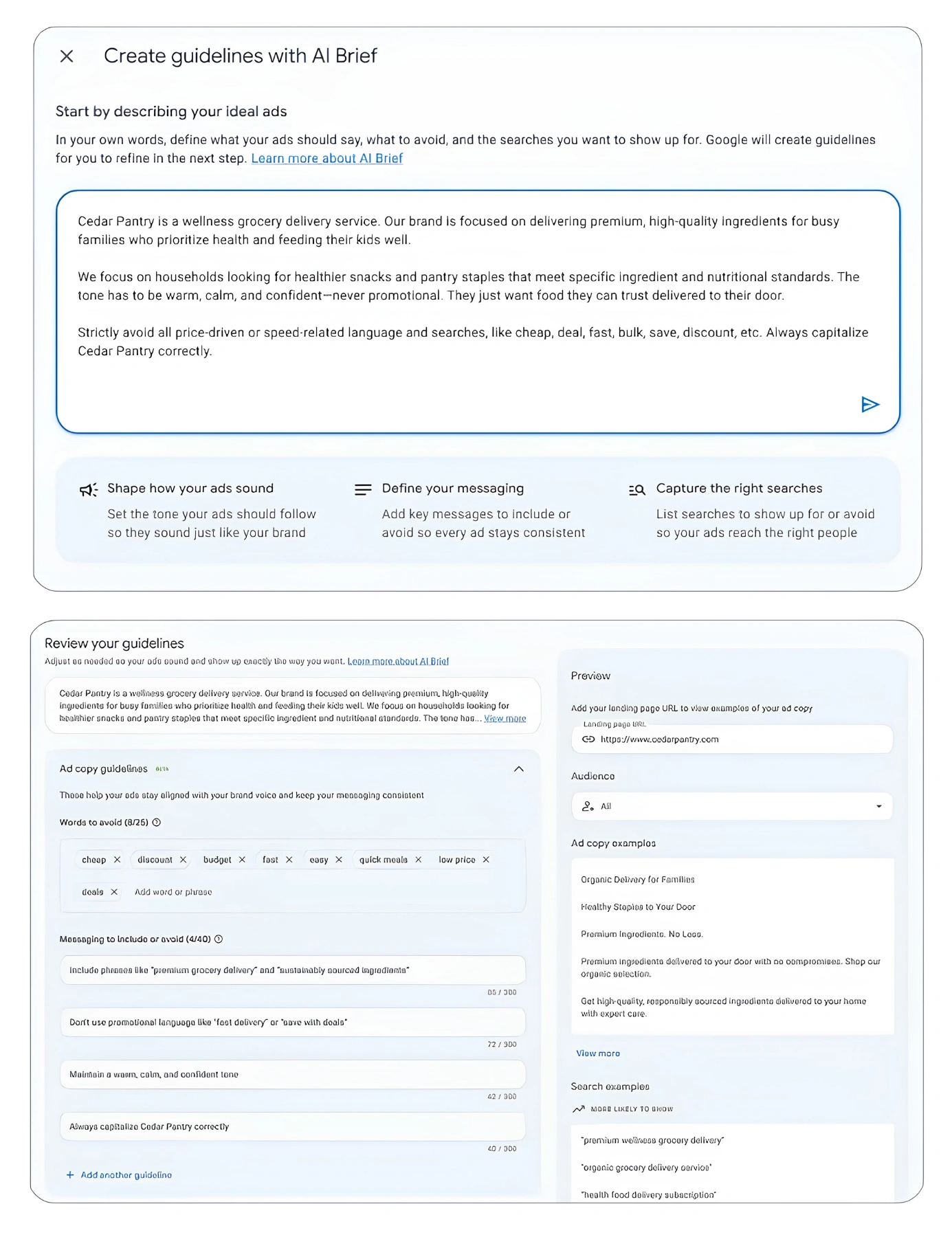
AI Brief was another announcement connected to AI Max for Search campaigns.
Google describes AI Brief as a way for advertisers to guide Google AI using their own words. Businesses can provide messaging direction, audience guidance, and matching preferences directly inside campaigns.
Examples include:
- “Focus on our fall collection”
- “Avoid searches related to in-person degrees”
- “Highlight our clean ingredients for health-conscious audiences”

What Businesses May Start Seeing
Google Ads has used automation and machine learning for years. AI Brief introduces a new layer of advertiser input by allowing businesses to guide how Google’s AI approaches messaging, audiences, and search opportunities.
That may sound straightforward, but many businesses haven’t clearly defined those priorities. Which customers are the best fit? Which services should receive the most attention? What should your brand be known for? What types of searches should be avoided?
Tools like AI Brief may reward businesses that have already answered those questions. The clearer those priorities are, the easier it may be to guide AI-powered campaigns in the right direction.
AI Max for Search Campaigns Keeps Expanding
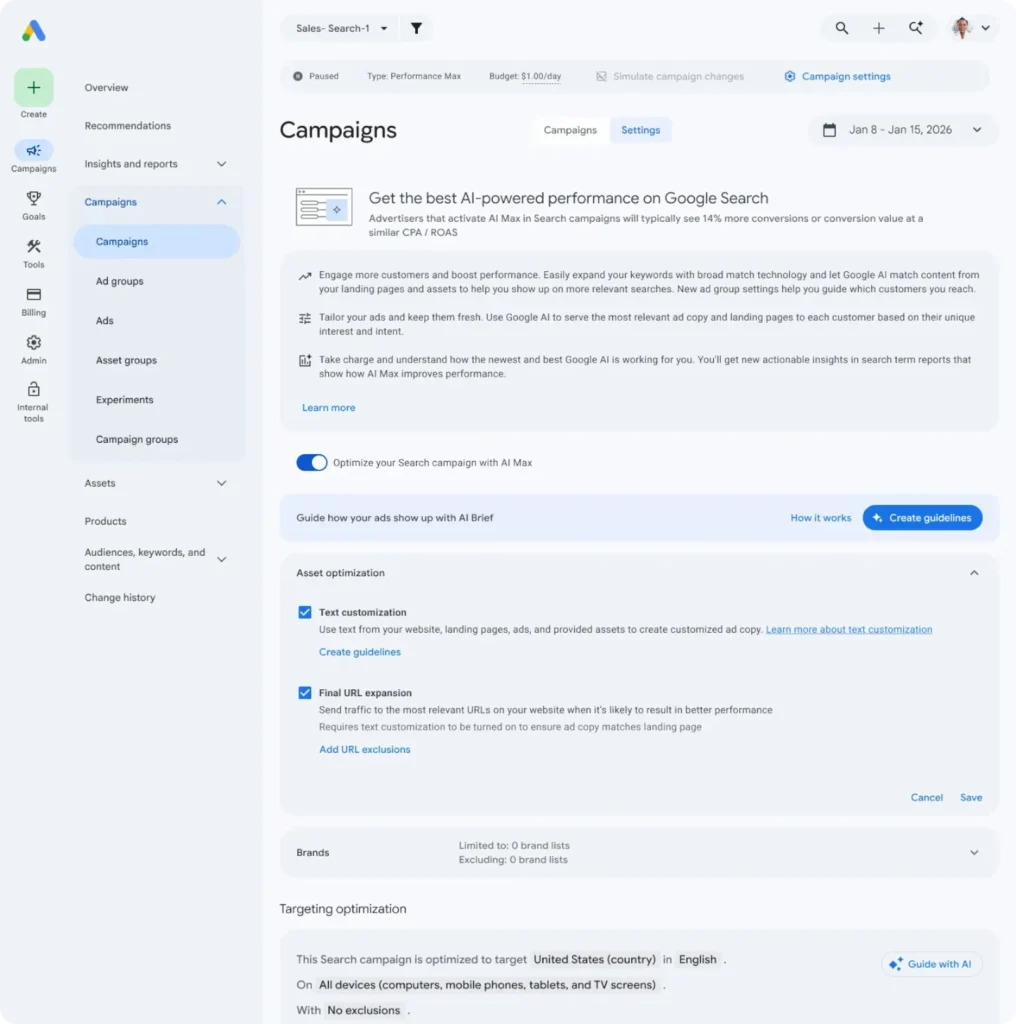
Google officially moved AI Max for Search campaigns out of beta earlier this year and introduced more updates during Google Marketing Live 2026.
The platform continues leaning further into:
- conversational query matching
- broader search interpretation
- AI-generated creative updates
- landing page expansion based on intent

New Features Introduced
Google introduced:
- AI Brief integrations
- text disclaimers
- expanded AI Max access for retailers
- stronger transparency and controls
This expansion creates a natural connection to the conversational search behavior discussed during Google I/O 2026 (LINK). Search experiences continue moving away from strict keyword matching and closer to intent interpretation.
What Advertisers May Need Next
Businesses spending all their time managing keyword lists may start missing the larger opportunity.
The sweeter advantage may come from improving the information AI systems use to interpret:
- your products
- your services
- your expertise
- your differentiators
- your customer experience
Professional service businesses relying on Google Ads may benefit more from stronger landing pages, clearer service descriptions, and tighter conversion tracking than endless keyword expansion alone.
Google Is Reducing Steps in AI-Assisted Shopping
Google also spent significant time pushing AI-powered shopping experiences further into conversational discovery and faster purchase decisions.
Several announcements worked together here:
- AI-powered Shopping ads
- AI Max for Shopping campaigns
- Direct Offers
The overall direction feels pretty clear: Google wants to shorten the path between discovery and purchase.
AI-Powered Shopping Ads Add Product Explanations
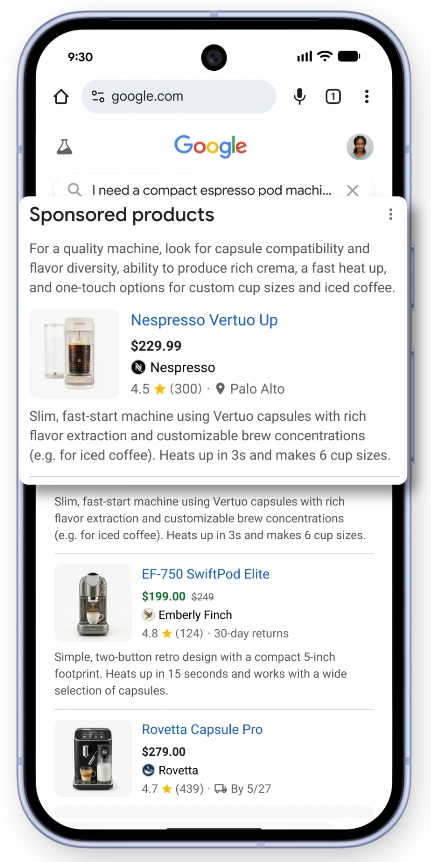
AI-powered Shopping ads introduce Gemini-generated product summaries directly into shopping experiences.
Instead of simply showing product listings, Google’s AI can explain why a product may be a good fit for a shopper based on their search intent.
Google highlighted features like:
- AI-generated product explainers
- conversational product matching
- simplified feature summaries
- recommendation-focused shopping experiences

What Retailers Should Watch
Product titles, descriptions, categories, attributes, images, and reviews help AI systems interpret products and decide what to recommend conversationally.
For ecommerce businesses, that may place more attention on the same elements that support strong ecommerce SEO: well-organized category pages, detailed product content, accurate product data, and trustworthy reviews.
Weak product descriptions, outdated product information, and thin category pages may create gaps in how products are interpreted and recommended.
AI Max for Shopping Campaigns Expands Conversational Discovery
Google also announced AI Max for Shopping campaigns, bringing many AI Max capabilities into Shopping campaigns through a one-click activation.
The platform uses Merchant Center feeds to:
- generate conversational Shopping ad copy
- match products against long-tail intent
- expand landing page relevance
- choose the most appropriate ad format automatically
Google framed this as helping retailers reach shoppers before they even search for specific product details.
What This Means for Product Visibility
AI systems are helping shape product discovery itself.
Product feeds are no longer simply ecommerce assets sitting quietly in Merchant Center. They’re becoming part of the information AI uses to evaluate, compare, and recommend products.
That could place more attention on:
- product feed optimization
- structured product data
- product categorization
- imagery
- landing page quality
- review management
Direct Offers Pushes Faster Purchase Decisions
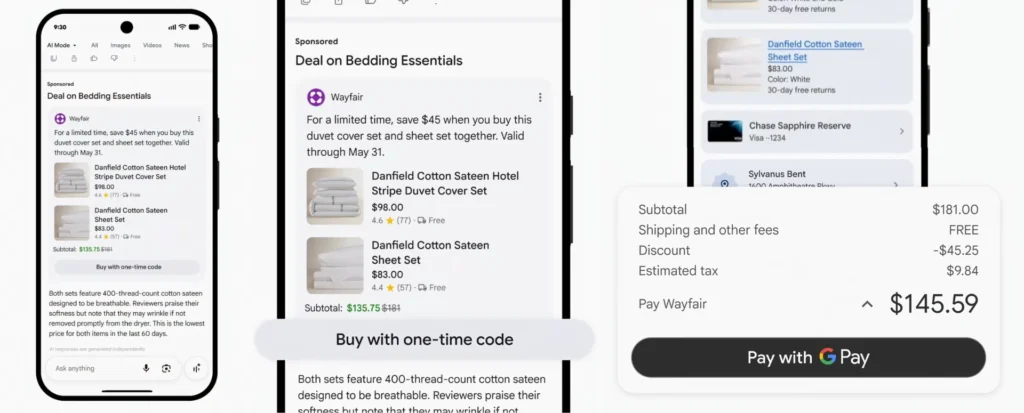
Google also expanded Direct Offers deeper into AI Mode experiences.
Retailers can now surface:
- discounts
- bundled promotions
- giveaways
- hotel offers
- AI-generated offer combinations
…directly during AI-assisted discovery experiences.
Google also introduced native checkout integrations for participating merchants, helping shorten the path from discovery to purchase.

What Ecommerce Brands May Start Seeing
Many retailers use promotions to help close a sale. Direct Offers may allow those promotions to appear much earlier in the decision-making process, creating a smoother path to purchase.
Instead of sending shoppers off to compare prices, search for discounts, or look for promotions elsewhere, Google is bringing more of those experiences directly into Search.
For retailers, that could create more opportunities to influence buying decisions earlier in the research process and closer to the point of purchase.
Google Is Bringing More AI Into Lead Generation
Google Marketing Live 2026 also showed Google continuing to expand AI further into lead generation and customer qualification workflows.
Two announcements stood out most:
- Business Agent for Leads
- Journey-aware bidding
Business Agent for Leads Expands Conversational Qualification
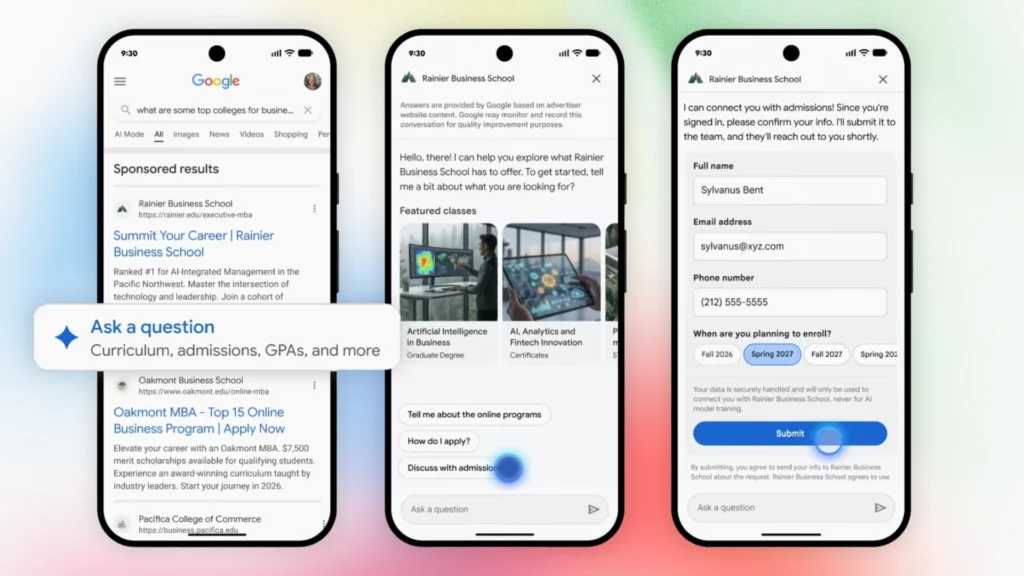
Business Agent for Leads introduces conversational AI experiences directly inside Search ads.
Google’s AI can answer customer questions, qualify prospects, collect lead information, and help businesses engage potential customers outside traditional business hours.
Google emphasized:
- 24/7 lead handling
- faster responses
- conversational qualification
- AI grounded in website content
- more consistent messaging

What Service Businesses Should Watch
Businesses with vague, outdated, or incomplete websites may create problems for these systems.
If AI tools are expected to explain:
- services
- pricing
- specialties
- service areas
- processes
- differentiators
…then businesses need content that supports those conversations clearly.
Professional service businesses relying heavily on Google Ads lead generation may need stronger landing pages and more detailed service information moving forward.
Note: Business Agent for Leads is currently limited to select industries, including education, automotive, and real estate. Google has not shared details about future availability, though similar Google Ads features often expand to additional industries after launch.
Journey-Aware Bidding Connects More Data to Google AI
Journey-Aware Bidding is one of the more technical announcements from Google Marketing Live 2026, but the idea is fairly straightforward.
Instead of optimizing only around a lead form submission or phone call, Google wants to understand what happens after that initial conversion. By importing additional conversion actions and customer journey data, advertisers can give Google AI more visibility into which leads turn into qualified opportunities, appointments, consultations, or customers.
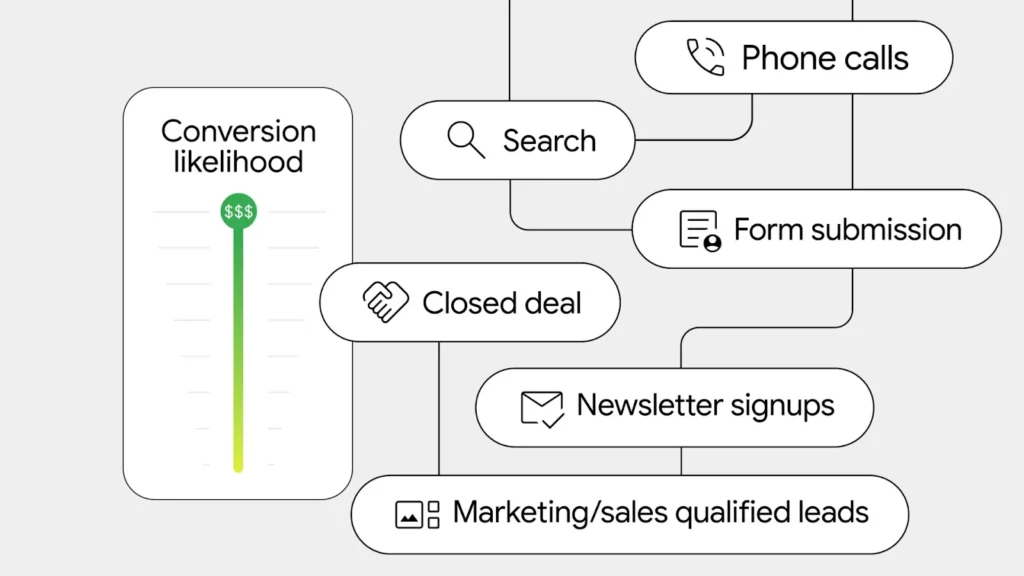
In other words, Google wants more than a quick taste of the customer journey. It wants to understand which leads actually become valuable business outcomes.
What This Could Mean for Advertisers
As Google’s bidding systems gain access to more customer journey data, conversion tracking may become even more important. Businesses that connect CRM data, offline conversions, and other post-lead actions may give Google stronger signals to optimize toward actual business outcomes rather than lead volume alone.
For law firms tracking consultations, healthcare providers tracking patient inquiries, and other professional service businesses, that could create additional value from tools like GA4, attribution reporting, and CRM integrations.
What Businesses Should Take Away from Google Marketing Live 2026
Google Marketing Live 2026 wasn’t about AI suddenly appearing inside advertising platforms. AI-driven automation, Smart Bidding, Performance Max, conversational experiences, and machine learning have been part of Google’s ecosystem for years.
What feels different now is how closely AI is moving toward the recommendation and decision-making layer of Search itself.
Google’s systems are helping users:
- evaluate businesses
- compare products
- qualify leads
- interpret offers
- narrow choices
- make faster decisions
Businesses that organize their information clearly, strengthen trust signals, improve product and service content, and tighten conversion tracking may place themselves in a stronger position as Google’s AI systems continue playing a larger role in how users discover, evaluate, and choose businesses online.
AI Search Keeps Changing. So Does Optimization.
Google Marketing Live 2026 sprinkled AI across nearly every corner of Search and advertising. From AI-generated recommendations to conversational discovery, many of these updates connect back to bigger conversations around AIO, GEO, and AEO.
Want the sweeter breakdown? Explore our FAQ resources:
AIO FAQs
GEO FAQs

AEO FAQs