
Google’s AI Search announcements at I/O 2026 pointed toward something bigger than a redesigned Search box or a few new Gemini features. The larger shift appears centered around reducing how much work users need to do between asking a question and making a decision.
Search has already been moving in this direction through conversational search experiences, AI Overviews, and AI Mode. What stood out during this year’s announcements was how much further Google appears willing to push Search toward handling more of the comparison, recommendation, and research process directly inside Google itself.
For businesses and marketers, that could influence how people research services, compare products, evaluate brands, and choose where to spend their money. The customer journey may start feeling a little shorter, smoother, and more automated as AI continues getting sprinkled throughout Search experiences.
Search is Becoming More Action-Oriented
Traditional search behavior often involved opening a long list of tabs, comparing websites manually, reading reviews across multiple platforms, and repeating searches over several days.
Google’s latest AI Search updates appear focused on helping users get answers and make decisions with fewer clicks and less manual searching.
At I/O, Google introduced expanded Search agents, AI-assisted booking tools, proactive monitoring features, conversational follow-ups, and more persistent Search experiences that can organize information and surface recommendations automatically.
Search is Handling More of the Research Process
Instead of manually repeating searches, users may increasingly rely on Search to:
- Monitor updates
- Compare options
- Track pricing
- Surface recommendations
- Organize ongoing tasks
- Suggest next steps
That changes the role Search plays in the customer journey. Search starts becoming less of a place people visit for links and more of a tool helping users compare options and make decisions faster.
Google has already been moving Search in this direction through AI Mode, conversational follow-ups, image-based searches, and more personalized search experiences. Google even shared that the average AI Mode query is now triple the length of a traditional Search query, signaling how much more conversational these experiences are becoming.
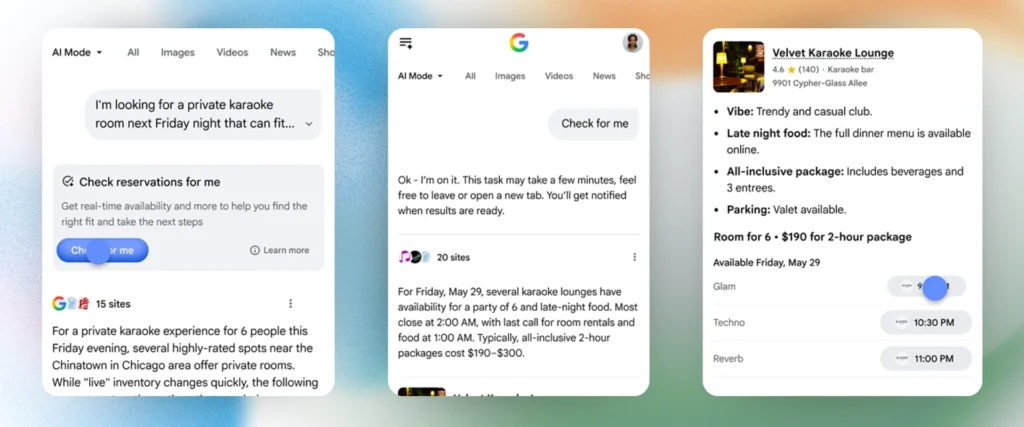
Instead of serving up a long list of blue links and sending users off to research everything themselves, Google appears increasingly focused on helping users narrow down choices directly inside Search.
The Customer Journey May Keep Getting Shorter
Google appears focused on reducing how much work users need to do before making a decision.
People already expect:
- Faster answers
- Quick comparisons
- Personalized recommendations
- Fewer clicks between questions and action
AI-assisted Search experiences continue pushing those habits further.
AI is Pulling More Information Together Automatically
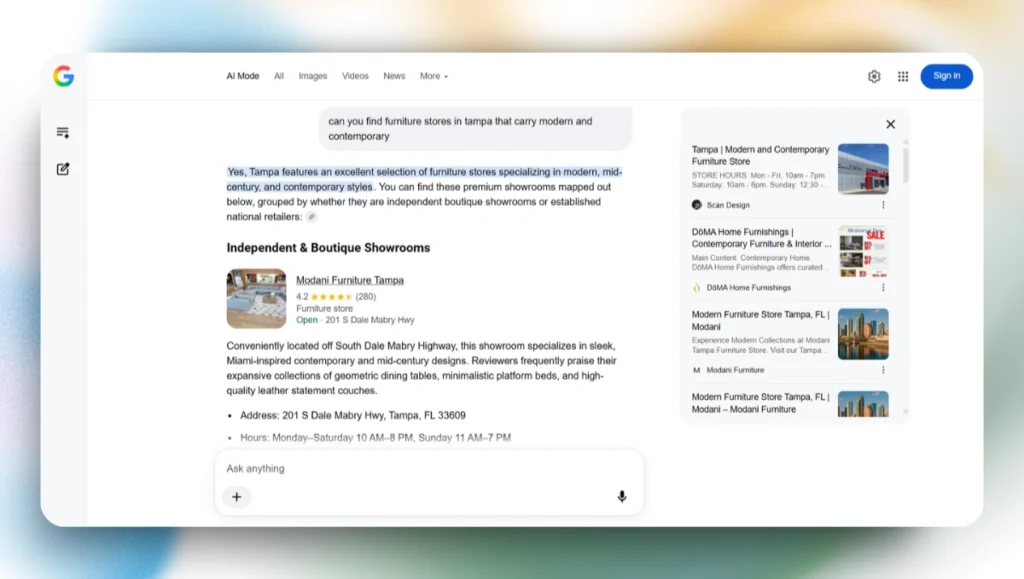
A user searching for a local service may no longer need to jump between ten different websites, maps, directories, and review platforms just to compare options.
Instead, Search is pulling more of that information together automatically through summaries, reviews, pricing details, recommendations, and comparison tools.
That does not mean websites suddenly stop mattering. It just means that Google appears interested in helping users make decisions faster without as much manual research along the way.
Businesses May Have Fewer Chances to Compete for Attention
For businesses, that could create fewer opportunities to rely on traditional discovery paths alone.
Users may spend less time clicking through long lists of websites and more time relying on AI-generated summaries, reviews, recommendations, and comparison features surfaced directly inside Search experiences.
That could make first impressions happen much faster.
A business with weak reviews, outdated information, thin content, or inconsistent branding across platforms may have a harder time standing out in these quicker recommendation-driven experiences.
Visibility still matters, though the way users discover and evaluate businesses may keep changing alongside the future of SEO.
Visibility Could Depend on More than Rankings
Search rankings are not a thing of the past. Businesses still need strong websites, helpful content, and trustworthy information online.
At the same time, AI-powered Search experiences may rely more heavily on the reputation and consistency businesses build across the web.
That could include:
- Reviews and reputation signals
- Consistent business information
- Recognizable expertise
- Organized website information
- Content focused on topics customers actually search for
- Consistent branding across websites, listings, and social platforms
Familiar Brands May have an Advantage
As AI systems take on a larger role in organizing information and surfacing recommendations, businesses may have fewer opportunities to introduce themselves from scratch during the research process.
Familiarity starts carrying more weight.
Brands that look trustworthy, recognizable, and consistent across multiple platforms may have an easier time getting recommended inside these newer Search experiences.
That larger shift is part of why more marketers are paying attention to concepts like AI Optimization (AIO) and Answer Engine Optimization (AEO). Businesses are starting to recognize that visibility may depend on more than rankings alone as Search keeps evolving.
AI Search Could Change How Businesses Compete for Attention
Google’s latest search direction may eventually create a smaller window for businesses to capture attention during the research process.
If AI-generated summaries, recommendations, and Search agents continue organizing more of the comparison process automatically, businesses may have fewer opportunities to win someone over through lengthy browsing sessions alone.
More Content Could Create More Competition
That could place more pressure on businesses to build:
- Recognizable brands
- Strong reputation signals
- Clear positioning
- Helpful, easy-to-interpret content
- Consistent visibility across multiple platforms
The internet is already becoming crowded with repetitive AI-generated content and lookalike messaging. Businesses that sound too similar may struggle more if AI systems continue narrowing down options for users automatically.
Fast answers are convenient, but distinct brands tend to stick longer.
As AI tools continue making content creation easier and faster, stronger brand voice and recognizable personality may become even more valuable. A little flavor may go a long way in a growing pile of content.
Faster Experiences May Still Raise Questions
There’s an obvious convenience factor to many of these AI Search experiences. Faster answers, automated comparisons, and AI-assisted recommendations can save users time and reduce research fatigue.
That said, some users may grow skeptical of how heavily decisions get shaped by AI-generated summaries and recommendations.
Questions around:
- Accuracy
- Transparency
- Privacy
- Biased recommendations
- Over-automation
are already becoming part of the larger AI conversation.
For businesses, that creates an interesting balance. Companies may need stronger digital trust signals while customers simultaneously become more cautious about how AI systems surface and prioritize information.
The technology keeps moving forward, though user comfort levels may take a little longer to settle in.
Google Wants Smoother Paths to Decisions
The biggest takeaway from Google’s AI Search push may be how much Google is trying to reduce the amount of searching, comparing, and clicking users need to do themselves.
That direction could continue reshaping how people:
- Discover businesses
- Compare services
- Evaluate products
- Research local providers
- Make purchasing decisions
Search experiences will continue changing, and businesses still need strong brands, trustworthy information, and online presence that customers and AI systems can understand quickly.
Google’s latest announcements simply offered a sweeter glimpse at where that path may keep heading next.