Google I/O 2026 delivered a massive batch of AI announcements, product updates, and Gemini integrations across nearly every corner of Google’s ecosystem.
Search. Shopping. Gmail. Content creation. Productivity tools. Browsing experiences. There was enough packed into this year’s keynote to leave marketers with a full-on sugar rush.
The sweet takeaway? Google is pushing AI further into everyday digital experiences, and that shift has real implications for how businesses get discovered online, how customers research products and services, and how marketing content gets created moving forward.
AI Is Becoming Part of Everyday Digital Experiences
One of the clearest themes throughout Google I/O 2026 was how much Gemini AI is becoming part of Google’s ecosystem.
Search experiences are becoming more conversational. Gmail is becoming more automated. Productivity tools are leaning into voice and AI-assisted workflows. Shopping tools are becoming more predictive and personalized.
Google introduced updates like Gemini Spark, Daily Brief, AI-powered inbox tools, and Docs Live, all pointing toward a future where AI quietly assists with everyday tasks behind the scenes.
The Goal: Fewer Steps, Faster Answers
A lot of these updates point in the same direction:
- Fewer clicks
- Faster answers
- Less manual searching
- More conversational experiences
- AI-assisted recommendations
Google wants users to spend less time digging for information and more time getting direct answers, suggestions, and actions from AI-powered systems. That shift matters for businesses because customer expectations tend to follow the platforms people use every day.
Search Keeps Moving Closer to Conversations
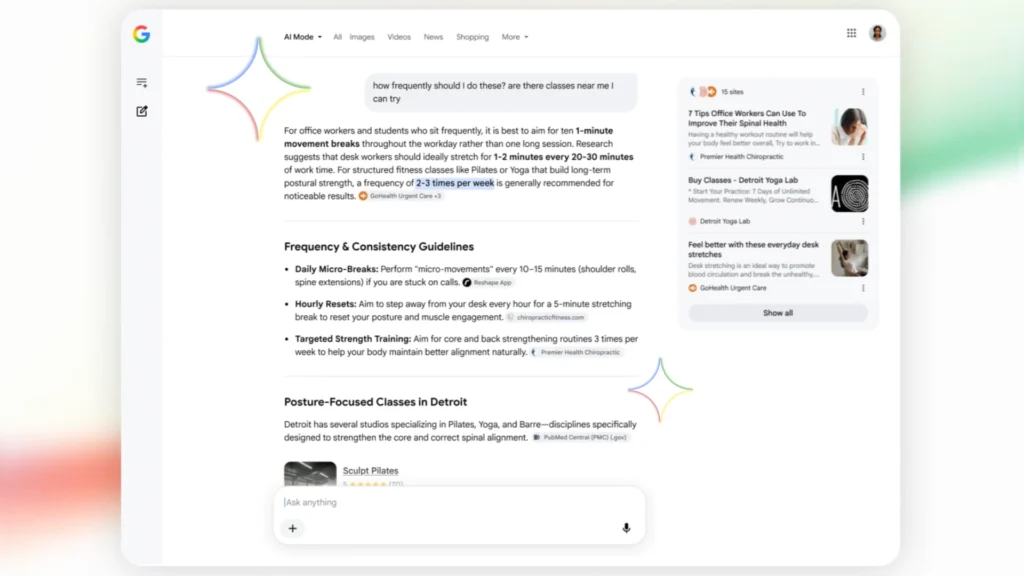
Search remained one of the biggest talking points at I/O, with Google continuing to expand AI Mode, AI Overviews, and a newly redesigned AI-powered Search experience.
Google shared that AI Mode has already surpassed one billion monthly users, with usage continuing to climb quarter after quarter.
AI Search Capabilities Continue Expanding
Search continues moving further into conversational and AI-assisted experiences, with Google expanding how Search interprets context, intent, and follow-up questions.
During I/O, Google demonstrated Search experiences capable of interpreting:
- Images
- Videos
- Files
- Browser tabs
- Conversational prompts
That creates a noticeably different experience from the traditional keyword-driven searches many businesses have optimized around for years.
What This Could Mean for Businesses
As Search becomes even more conversational and AI-assisted, businesses may need stronger digital trust signals, organized content, and recognizable online presence as these experiences continue expanding.
We’ll break down the AI Search side of this in more detail in a separate article because there’s a lot to unwrap there.
Google Wants AI Working More Behind the Scenes
Another major theme throughout the event was Google’s growing push into AI agents.
Google introduced experiences like Information Agents, Gemini Spark, and custom Search dashboards that can monitor information, summarize updates, organize tasks, and proactively assist users in the background.
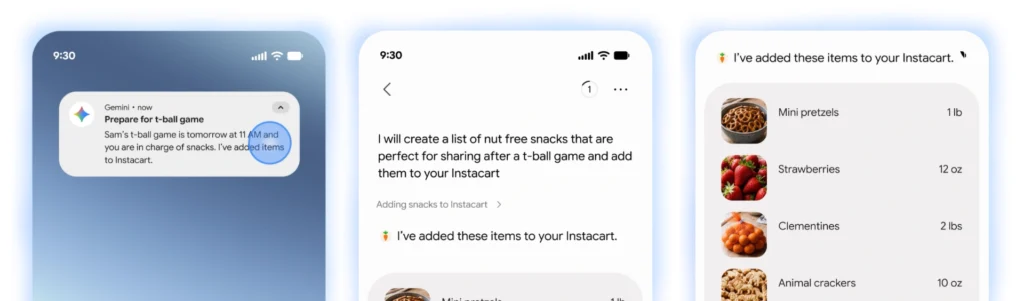
Many of these behaviors already exist in smaller ways across Search, shopping, maps, and recommendation systems. Google’s latest announcements continue pushing those experiences further by giving AI a larger role in organizing information, surfacing recommendations, and assisting users automatically.
AI Takes a Bigger Role in Customer Research
That could continue influencing how people:
- Research businesses
- Compare products and services
- Track pricing
- Monitor reviews
- Make purchasing decisions
Consumers already expect quick answers and fewer steps during the research process. Google’s growing AI push continues moving those experiences toward more automated recommendations, summaries, and AI-assisted decision making.
Business Visibility May Start Looking Different
As AI becomes more involved in surfacing businesses and organizing information, the signals tied to trust and credibility may become even more important.
That could place more weight on:
- Consistent business information
- Real reviews
- Recognizable expertise
- Strong website content
- Brand trust across multiple platforms
Businesses still need visibility. Google just appears focused on shortening the path between questions and decisions, which is part of why conversations around AI Optimization (AIO), Answer Engine Optimization (AEO), and AI-assisted discovery continue growing.
AI Content Creation Keeps Getting Easier
Google also rolled out several new AI-powered creative tools aimed at simplifying content production.
Google showcased a mix of new AI capabilities and expanded creative tools across Gemini Omni, Gemini 3.5, Google Flow, Google Pics, and Pomelli, continuing its push toward more multimodal and action-oriented experiences for content, branding, and creative workflows.
Faster Content Workflows Create New Opportunities
Businesses now have easier access to:
- AI-generated visuals
- Faster brainstorming
- Automated content variations
- Conversational editing tools
- Simplified creative production
For marketers, that creates opportunities to move faster and test ideas more efficiently.
More Content Can Make Brands Blend Together
There’s another side to that sweet convenience, though.
As AI-generated content becomes easier to create, the internet risks becoming flooded with repetitive messaging and lookalike content that all starts blending together.
Fast content is convenient. Memorable brands stick longer.
That’s where recognizable voice, original ideas, customer trust, and human personality may become even more valuable over time.
If every business uses the same prompts, tools, and templates, eventually everything starts tasting a little vanilla.
Shopping and Discovery Are Becoming More AI-Assisted
Google continued pushing deeper into AI-assisted shopping experiences with updates like Universal Cart, smarter product discovery features, and recommendation-driven purchasing workflows designed to shorten the path between browsing and buying.
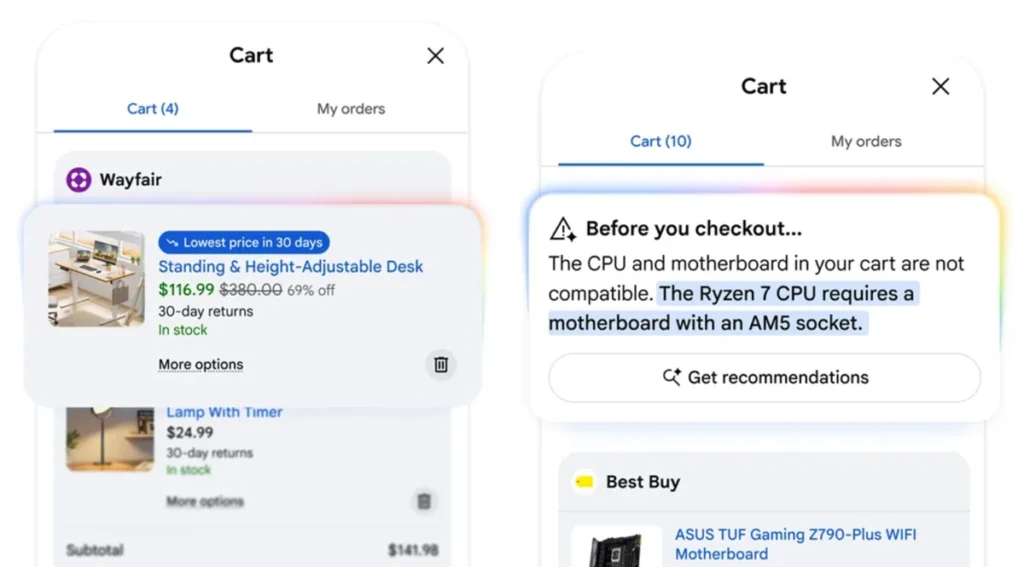
The goal appears focused on helping users:
- Compare products
- Track pricing
- Monitor deals
- Find alternatives
- Simplify checkout
For ecommerce brands and local businesses, this reinforces the value of accurate business information, strong product data, reviews, and structured content platforms can easily interpret.
There’s a sweet convenience factor to these experiences for consumers. Faster recommendations, fewer clicks, and AI-assisted comparisons can make shopping feel smoother and more efficient.
At the same time, businesses may have fewer opportunities to shape the customer journey directly through website visits alone as AI takes a larger role in surfacing recommendations and product information. That makes digital trust signals even more important.
The AI Sugar Rush Comes with Questions Too
As exciting as many of these announcements were, Google’s growing push into AI agents and always-on assistance also raises understandable questions for businesses and consumers alike.
Many of these experiences connect across products like:
- Gmail
- Calendar
- Shopping activity
- Browsing behavior
- Productivity tools
Convenient? Absolutely. Still, conversations around privacy, transparency, AI-generated content, and automated recommendations are continuing to grow alongside these tools.
Businesses are asking questions too, especially around:
- AI-generated summaries replacing website visits
- Visibility inside AI-powered search experiences
- Brand differentiation in a flood of AI-generated content
- Maintaining human connection in more automated experiences
Google clearly recognizes some of these concerns, which is likely why transparency and AI-generated content verification became recurring themes throughout I/O with updates to SynthID and content credentials.
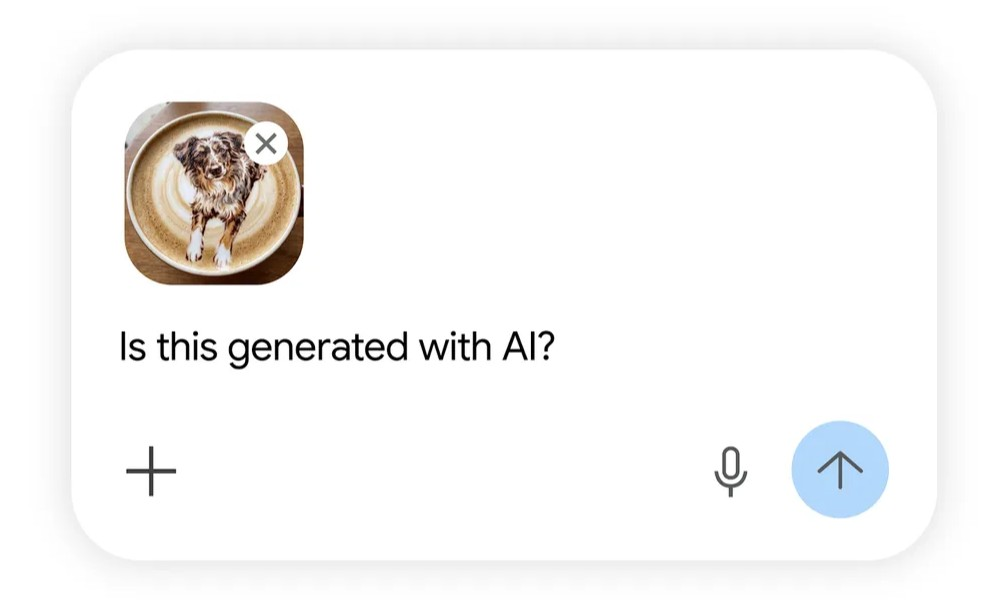
Technology is moving quickly, and many businesses are still figuring out where the sweet spot between automation and authenticity really is.
What Businesses Should Pay Attention To
It’s easy to get caught up in the flood of AI announcements during events like Google I/O. Most business owners do not need to become AI engineers overnight, though.
The bigger takeaway is simpler than that.
Digital experiences are becoming:
- More conversational
- More automated
- More personalized
- More AI-assisted
- More integrated across platforms
Search experiences will continue changing, and businesses still need strong digital presence that both customers and AI systems can recognize easily.
Google I/O 2026 simply offered marketers a sweeter glimpse at where things may be headed next.