
How often should you redesign your website? Every two years? Three? Five?
Your website doesn’t come with an expiration date, but that doesn’t mean it can’t go stale.
A website can be a few years old and still look fresh, work well, and support where your business is headed. Another can be relatively new and already feel out of step with your brand, frustrating to use, or poorly equipped to turn visitors into customers.
So, when is it time to redesign your website? Instead of watching the calendar, take a closer look at what your website is actually doing for your business.
Does it still look like you? Can customers quickly find what they came for? Is it easy to reach out? Does it work just as well on a phone? Can search engines make sense of it?
If a few of those questions leave a sour taste, your website may be telling you it’s ready for a redesign.
Your Website No Longer Looks Like Your Brand
Your brand probably doesn’t look exactly like it did when your website launched. Maybe you’ve updated your colors, photography, messaging, signage, vehicles, or the overall personality you put in front of customers. Your website should feel like it belongs to the same business.
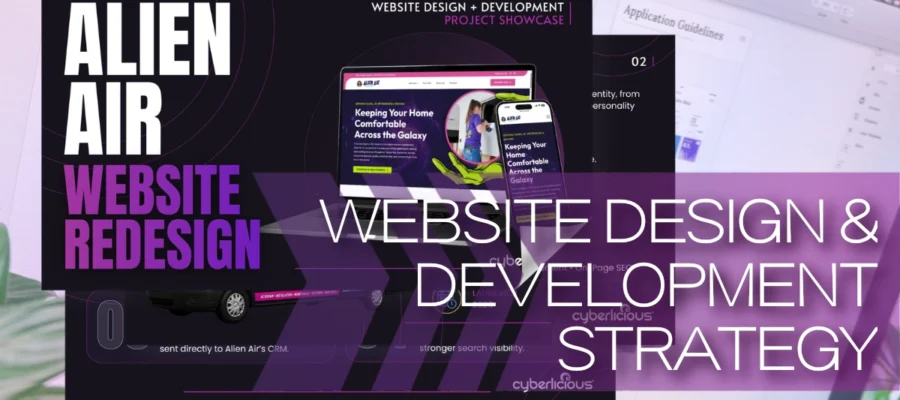
That was a big part of the opportunity with Alien Air. Their bright colors, alien mascot, wrapped fleet, and out-of-this-world personality already made the HVAC company hard to miss. Their website had the essentials, but there was room to bring much more of that flavor online.
The redesign carried Alien Air’s personality throughout the site with bold colors, branded imagery, space-themed copy, and playful details that made the digital experience feel like an extension of the brand people already knew.
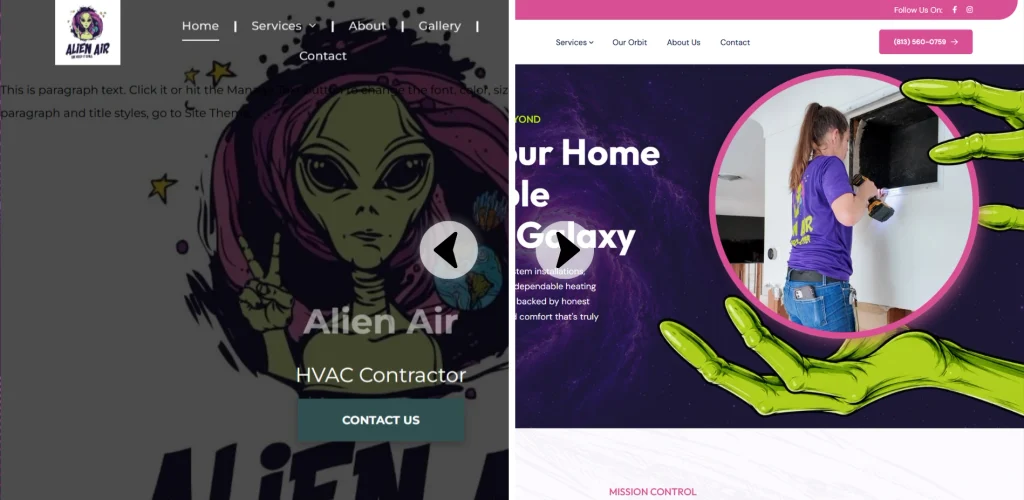
If you’re hesitant to send someone to your website because it no longer represents the business you’ve built, that’s a pretty strong sign it may be time for a redesign.
Customers Have to Work Too Hard
People usually arrive on your website looking for something. A service. A price. An answer. A reason to choose you. How quickly can they get there?
As websites grow, navigation and content can get messy. New pages get tucked into existing menus, important information gets buried, and the path from the homepage to a specific service becomes longer than it needs to be.
A website redesign gives you the chance to rethink that structure around what customers are actually looking for. Clear navigation and well-organized content can make it easier for visitors to explore your business and decide whether you’re the right fit.
Take a few minutes and try completing common tasks on your own site. If you have to hunt for something, your customers probably do too.
Your Website Is Making Leads Work for It
Finding the right service is one thing. Acting on it should be even easier.
Someone ready to contact your business shouldn’t have to hunt for a phone number, backtrack to the contact page, or fill out a form that disappears into an inbox nobody checks often enough. Calls to action and contact options should show up naturally as visitors move through the site.
For Alien Air, we built lead opportunities throughout the redesigned website and connected its forms directly to the company’s CRM. That shortened the path from a website inquiry to the Alien Air team, helping them respond faster and provide better customer service.
Look at what happens on your own website between “I’m interested” and “I’ve contacted you.” Every unnecessary hurdle gives a potential customer another chance to leave.
Want to See the Alien Air Redesign Up Close?
See how we brought Alien Air’s brand, website structure, lead capture, mobile experience, and search strategy together in the full visual case study.
Your Mobile Experience Is Falling Behind
Pull up your website on your phone and use it like a customer would. Browse the menu, visit a few service pages, tap the buttons, read the content, and try filling out a form.
A site can technically be responsive and still be a pain to use. Tiny buttons, awkward menus, oversized images, crowded text, and endless scrolling can turn a perfectly good desktop experience sour on a smaller screen.
And that smaller screen carries a pretty big share of search. Roughly 64% of Google searches happen on mobile devices, making the mobile experience a major part of how people find and interact with businesses online.
Mobile needs to be part of the redesign from the beginning. For Alien Air, that meant carrying the same bold personality onto smaller screens while adapting the experience so services, navigation, and contact options remained easy to use.
If your desktop site gets all the love and mobile feels like an afterthought, it may be time to rethink both.
Search Was an Afterthought
A fresh website can look pretty sweet. Losing search visibility during the redesign can spoil the whole thing.
SEO should be considered before pages start moving, disappearing, or getting renamed. Changes to your content, URLs, site structure, and other parts of an existing website can affect your organic visibility after launch.
A redesign can also address a website that wasn’t built around search from the start. For Alien Air, we planned individual service pages and incorporated on-page SEO into the build rather than trying to sprinkle it on afterward.
SWEET QUESTION
How Do You Redesign a Website Without Losing SEO?
A website redesign can change pages, content, URLs, links, and other elements that contribute to your current search visibility. Protecting that value requires knowing what matters before deciding what changes.
If your website already earns organic traffic and rankings, SEO should be part of the redesign plan so you’re not starting from scratch when the new site launches.
Your Website No Longer Fits Your Business
Your website might still look good and work perfectly fine. It can still be the wrong website for the business you run today.
Services change. Audiences shift. Businesses enter new markets, add locations, change priorities, or start pursuing a completely different type of customer. Eventually, the website you built for an earlier version of the business may no longer fit where you’re headed.
If you regularly have to explain that your website doesn’t quite show everything you offer anymore, take the hint. Your business has already moved forward. Your website may need to catch up.
Simple Website Updates Have Become a Pain
Adding a service, swapping an image, or changing a block of copy shouldn’t feel risky.
Older websites can collect years of plugins, patches, outdated layouts, and workarounds. Eventually, your team spends more time figuring out how to work around the website than actually improving it.
That doesn’t mean every annoying update calls for a complete rebuild. Once those limitations start holding back routine marketing changes, new content, or future plans, though, another patch may only buy you so much time.
WEBSITE REDESIGN FAQS
Still Have Questions About Website Redesigns?
Once you start considering a website redesign, a few practical questions usually come next. Here are some of the big ones.
How Often Should You Redesign Your Website?
There’s no set schedule. Check in on your website regularly and pay attention when problems with branding, usability, lead capture, mobile, search, or changing business goals start stacking up.
One problem may call for a fix. Several can signal that it’s time to look at the website as a whole.
What Goes Into Redesigning a Website?
Figuring out how to redesign a website starts with figuring out what needs to change. A redesign can touch everything from what visitors see and how they move through the site to what happens behind the scenes.
The scope will look different for every business, which is why we plan website projects around what the new site actually needs to accomplish.
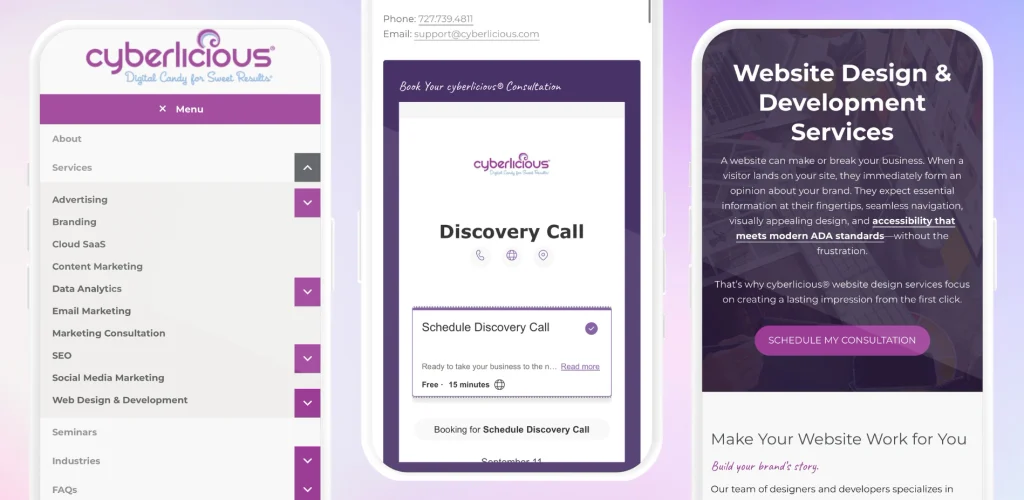
Curious what happens from there? Our What is Website Design & Development? FAQ takes a closer look at the process.
The goal isn’t to give the old site a fresh coat of sugar and send it back out the door. Fix the reasons that made you consider a redesign in the first place.
How Long Does a Website Redesign Take?
Page count, content, functionality, integrations, design requirements, approvals, and the condition of the existing website can all affect the project timeline. A smaller site with content ready to go may move much faster than a larger build requiring new copy, custom functionality, or a significant SEO migration.
Our website design and development timeline FAQ breaks down what can affect the process and how long a website project may take.
How Much Does It Cost to Redesign a Website?
Website redesign costs depend on what the new site needs to accomplish. Size, design complexity, functionality, content, SEO, integrations, accessibility, and other project requirements can all change the scope.
Start with what needs fixing and what you want the new website to do for your business. That gives you a much better foundation for determining what the project should include and what you should realistically budget.
Need a sweeter breakdown? Our website design and development cost FAQ covers the factors that can affect website pricing.
Is It Time to Redesign Your Website?
If you came here wondering “When is it time to redesign my website?” you probably have a reason for asking.
Maybe your brand has moved on. Customers have trouble finding what they need. Mobile could use some love. Leads are hitting sticky situations. Search needs more attention. Your business has changed, or maintaining the site has become a headache.
One of those problems may be fixable without rebuilding everything. When several start piling up, investing in another round of patches may make less sense than building a website around where your business is headed next.
Alien Air reached that point. We took the personality people already recognized and carried it into a website built around the company’s services, customers, lead process, mobile experience, and search.
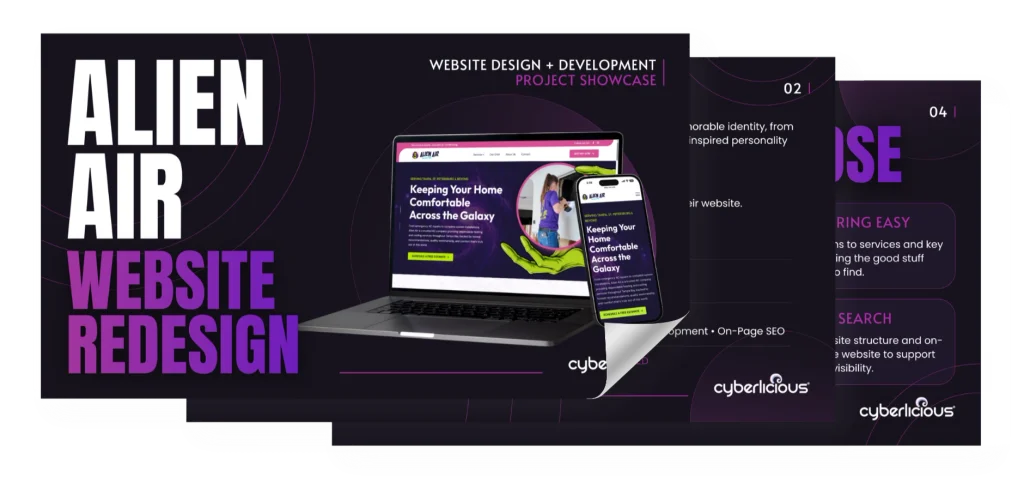
Craving a Closer Look?
See how it all came together. Download the Alien Air Website Redesign Case Study for a visual look at the before and after, project goals, desktop and mobile experiences, lead capture, and finished design.